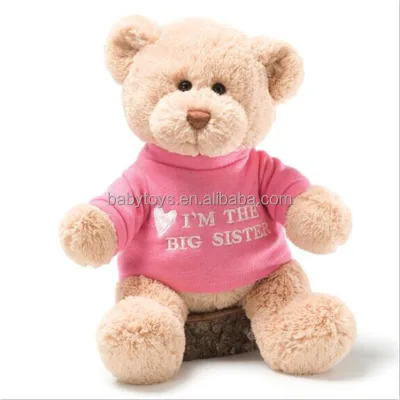
Source embroidered teddy bear plush toy for Gifts, Toys, and Promotions
Explore 30 options for the embroidered teddy bear plush toy suitable for Mother Day gifts, promotional events, and general play. Buyers can compare customization levels, certifications, and delivery times across these sitting and standing animal styles.
Key considerations
Products List



Comprehensive Sourcing Guide
Strategic Sourcing Guide for Embroidered Teddy Bear Plush Toys
Understanding Product Variants and Technical Specifications
When sourcing embroidered teddy bear plush toys, buyers must first distinguish between the specific technical configurations available in the market. The product landscape is not monolithic; it includes variations ranging from fully stuffed sitting animals to unstuffed skins intended for further customization. The technical definition of the product often hinges on the "Modelling Source," which is typically categorized as animals, specifically bears. The physical form factor is a critical differentiator. Some inventory lists describe the product as a "Sitting Animal" style, while others specify a "Standing Animal" configuration. These structural differences directly impact the internal stuffing requirements, the embroidery placement area, and the final retail presentation.
The physical dimensions of the plush toy are equally vital for logistics planning. Sourcing data indicates that finished products often adhere to specific carton standards, such as a 46x56x60 cm configuration for certain models, while others may utilize a 62x42x54 cm standard. The "Plush Length" specification is another key technical attribute, with products ranging from "Short Plush Toys" to standard "Plush Toys." Buyers should verify the exact length and width of the specific model they intend to purchase, as this determines the volume of the final shipment. Furthermore, the manufacturing technique varies; some items are produced via "Sewing Products" methods, while others are explicitly noted as "Hand-Made." This distinction affects the consistency of the embroidery and the overall tactile quality of the bear.
The model numbers associated with these products, such as M100690, M100688, M100731, M100851, M100339, and LOK-OT080208, serve as unique identifiers for specific design iterations. These codes often correlate with specific dimensions and packing configurations. For instance, one model might be packed as 1 piece in a polybag with 80 pieces per carton, whereas another might have a density of 40 or 50 pieces per carton. Understanding these technical variances is the first step in ensuring that the ordered goods match the intended retail requirements.
Compliance and Certification Verification
For any plush toy intended for the global market, particularly those targeting children, compliance with safety standards is non-negotiable. The supply chain for embroidered teddy bears must be rigorously vetted against international safety regulations. The documented certifications for these products include CE, EN71, ASTM, CPSIA, REACH, and Azo Free. These are not merely marketing terms but essential verification points for procurement officers.
The EN71 standard is particularly critical for the European market, covering mechanical and physical properties, flammability, and chemical migration. Similarly, ASTM and CPSIA are the primary benchmarks for the United States, ensuring that the materials used in the plush toy, including the thread for embroidery and the fabric, do not contain harmful levels of lead or phthalates. The REACH regulation further mandates the restriction of hazardous substances within the European Union. Buyers must request current test reports that explicitly reference these standards for the specific model being sourced.
It is important to note that while "Azo Free" is a listed attribute, indicating the absence of harmful azo dyes, this must be verified through third-party laboratory testing rather than assumed based on product descriptions. The presence of these certifications suggests a baseline of safety, but the buyer's responsibility is to ensure that the specific batch of goods being shipped carries valid, up-to-date documentation. Without these verifications, the risk of customs detention or product recalls increases significantly. The "Any Age" or specific age ranges like "3-8 Years" listed on product descriptions must align with the intended safety testing; a toy marketed for "Any Age" generally requires the highest tier of safety compliance to ensure no small parts pose a choking hazard for the youngest users.
Cost Drivers and Minimum Order Quantity Analysis
The financial structure of sourcing embroidered teddy bears is influenced by several variable factors, with the Minimum Order Quantity (MOQ) being a primary driver. The market data reveals a wide spectrum of MOQ requirements, ranging from as low as 10 pieces to as high as 2000 pieces per style. This variance often correlates with the complexity of the customization and the production method. For example, a standard "Sitting Animal" model might have a higher MOQ of 500 pieces per style, reflecting the setup costs for mass production. Conversely, custom-made options or specific "Teddy Bear Skins" might have a lower entry point of 10 pieces, catering to smaller buyers or prototype testing.
Production time and sample lead times also impact the overall cost structure. The standard sample time for these products is typically 5 to 8 working days. However, the production lead time can vary significantly, with ranges observed between 10 to 35 working days. Longer lead times often necessitate earlier planning and potentially higher inventory carrying costs. The "Delivery Time" of 25 to 35 working days for bulk orders further underscores the need for precise supply chain planning.
Pricing is another complex variable. While specific unit prices are not universally fixed, the observed price range in the market spans from $0.50 to $10,000. This broad range likely reflects the difference between a single unit cost and the total value of a large container order, or potentially the inclusion of high-end custom packaging and design fees. The packing configuration, such as 1 piece in a polybag with 80 pieces in a carton versus 40 pieces in a carton, directly affects the shipping cost per unit. Buyers must calculate the landed cost by factoring in the carton density, the shipping method (Ocean or Air), and any additional services like "Door to Door Service."
Typical Applications and Market Positioning
Embroidered teddy bear plush toys serve a diverse array of applications, extending beyond simple play. The primary use cases identified include "Mother Day Gift," "Toy," and "Promotion." The "Mother Day Gift" category suggests a seasonal spike in demand, where the emotional value of the product is paramount. In this context, the embroidery detail becomes a critical selling point, allowing for personalized messages or specific designs that enhance the gift's sentimental value.
The "Promotion" use case indicates that these toys are frequently utilized as corporate gifts or marketing giveaways. In this scenario, the customization aspect is key. The "Customization: Available" attribute allows businesses to brand the bear with logos or specific slogans. The "Toy Design: Custom Made" feature further supports this, enabling unique shapes or sizes that align with a brand's identity. The "Any Age" designation broadens the market reach, making these items suitable for a wide demographic, from infants to adults.
The "Sitting Animal" and "Standing Animal" styles offer different utility in retail environments. Sitting bears are often preferred for display purposes due to their stability, while standing bears might be more engaging for interactive play. The "Unstuffed Plush Toy" variant presents a unique application for buyers who wish to add their own stuffing or use the product as a base for further manufacturing. This flexibility allows for a broader range of applications, from educational kits to DIY craft projects. The "Main Market: Global" status confirms that these products are designed to meet international shipping and regulatory requirements, making them suitable for export to various regions.
Supplier Evaluation and Operational Capabilities
Selecting the right supplier requires a thorough evaluation of their operational capabilities and logistical infrastructure. The "prod_origin" is consistently listed as Guangdong, China, a major manufacturing hub known for its textile and toy production expertise. Buyers should verify that the supplier has the capacity to handle the specific "Technical" requirements, whether they are "Sewing Products" or "Hand-Made" items. Hand-made processes often imply a higher level of craftsmanship but may result in longer production times and higher variability in output.
The loading port is another critical operational detail. The data indicates that shipments typically depart from Shenzhen or Guangzhou. Buyers must ensure that their logistics partners are familiar with these ports to avoid delays. The "Shipping" options, including Ocean and Air, provide flexibility based on the urgency of the order. For time-sensitive promotional campaigns, Air shipping might be necessary, despite the higher cost. For standard inventory replenishment, Ocean shipping offers a more economical solution.
The "Delivery" capabilities, such as "Door to Door Service Available," are significant for buyers who prefer a simplified logistics experience. This service can reduce the administrative burden on the buyer's team. However, buyers must confirm the specific terms of this service, including who bears the risk during transit and how customs clearance is handled. The "Packing" specifications, which may vary from standard polybag and carton configurations to custom requests based on toy size, should be clearly defined in the purchase agreement to prevent damage during transit.
Quality Control and Long-Term Procurement Strategy
Effective quality control is essential to maintain brand integrity and ensure customer satisfaction. Given the "Customization: Available" nature of these products, the embroidery quality must be meticulously inspected. Buyers should establish clear acceptance criteria for stitch density, color accuracy, and alignment. The "Toy Design: Custom Made" aspect requires a robust approval process before mass production begins. This typically involves reviewing a pre-production sample to ensure that the design translates correctly to the final product.
Long-term procurement considerations involve building a sustainable relationship with suppliers who can consistently meet quality and delivery standards. The "Production Time" of 25 to 35 days suggests that buyers should maintain a steady order cycle rather than relying on last-minute purchases. Consistent ordering allows suppliers to optimize their production schedules, potentially leading to better pricing and faster turnaround times.
Buyers should also consider the "Standard" specifications, such as the 46x56x60 cm or 62x42x54 cm dimensions, as part of their long-term strategy. Standardizing on specific sizes can simplify inventory management and reduce shipping costs. Additionally, maintaining a relationship with suppliers who hold valid certifications like CE, EN71, and ASTM ensures that the supply chain remains compliant with evolving international regulations. Regular audits and quality checks should be integrated into the procurement process to mitigate risks and ensure that the embroidered teddy bear plush toys continue to meet the high standards expected by end consumers.
FAQs
What certifications do embroidered teddy bear plush toys have?
These toys carry CE, EN71, ASTM, CPSIA, REACH, and Azo Free certifications. Buyers must verify current test reports for specific models to ensure compliance with international safety regulations before placing orders.
How long does sample production take for these items?
Sample production typically requires 5 to 8 working days. This timeframe allows for the creation of prototypes to verify embroidery quality and design accuracy before mass production begins.
Which minimum order quantities apply to different styles?
MOQs vary significantly, ranging from 10 pieces for custom skins to 500 pieces per style for standard sitting animals. The specific quantity depends on the model complexity and customization level requested.
Can buyers customize the design and embroidery on these toys?
Yes, customization is available for design and embroidery details. Buyers can request specific styles like sitting or standing animals, and the supplier offers door-to-door service for global delivery.
What are the standard packing configurations for these plush toys?
Packing usually involves one piece in a polybag with 40 to 80 pieces per carton. Specific carton dimensions like 46x56x60 cm or 62x42x54 cm depend on the model size and client request.
Where are these embroidered teddy bears manufactured and shipped from?
Products originate from Guangdong, China, and ship from Shenzhen or Guangzhou ports. Buyers can choose between ocean or air shipping methods based on their urgency and budget requirements.
What is the typical delivery time for bulk orders?
Bulk delivery times range from 10 to 35 working days depending on the order size. Production time is generally 25 to 35 days, requiring careful planning for seasonal demand peaks.